Showing posts with label LEARN GUITAR. Show all posts

Sunday, October 23, 2022

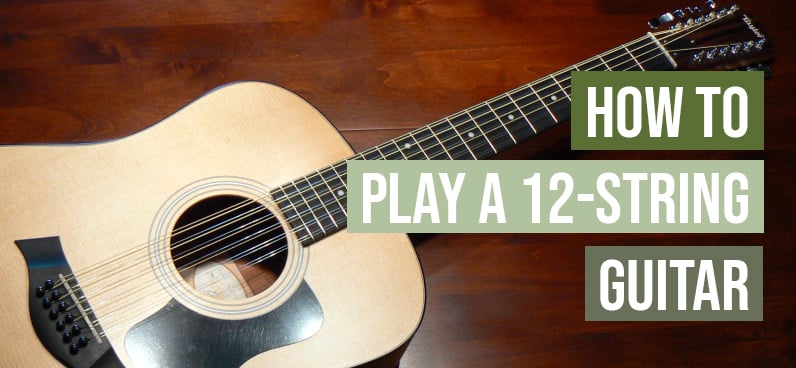
How To Play A 12-String Guitar


How to Play a 12-String Guitar

This guest blog post is presented by our friends at Deplike Guitar FX

If you're a fan of the sound of an acoustic guitar, then you're probably listening to a song that features two guitarists playing together seamlessly. 

Various models on the market can accommodate different budgets. With various features and options, 12-string acoustic guitars can provide a unique and authentic sound.

The sound of 12-string electric and acoustic guitars has captivated listeners for decades. Whether you're looking for an electric or acoustic guitar, there's something special about this versatile instrument.

This guide will walk you through the steps needed to learn how to play a 12-string guitar. Although it's commonly considered the same model as a six-string guitar, the small differences can make it hard to transition seamlessly.

What is a 12 String Guitar?

Before the electric guitar became a common instrument in rock music, 12-strings were a staple in folk music. These instruments' added power and resonance made them an ideal choice for artists who wanted to perform without amplifiers. The jangle and shimmer of these instruments also added a more appealing dimension to their voices. For solo acoustic performances, 12-strings had an advantage.

Due to the emergence of the electric guitar industry during the 1950s and 1960s, companies such as Danelectro and Rickenbacker started making electric versions of 12-strings. While these instruments were no longer necessary for volume, their unique vibrations and choruses became more apparent with the addition of electric pickup systems.

The 12-string guitar is not equipped with 12 strings specifically tuned to different notes, such as those used in seven- and eight-string models. Instead, it has six strings that are the same as those used in a regular guitar. These are then paired with six other strings tuned to the same standard. The resulting strings are then tuned to unison.

Unlike other extended-range models, the 12-string guitar doesn't open up any notes on the fretboard. Its appeal is due to the added resonance and the jangle of the additional six strings. Also, since their bodies and necks are close to the size of six-string models, the learning curve for these guitars is shorter.

Like other six-string models, the 12-string guitar can be played similarly. Just like with regular six-string models, the finger is placed on the bridge so that the body covers both the original and the matched strings simultaneously.

What Does a 12-String Guitar Sound Like?

Due to the extra strings, some 12-string models are referred to as "shimmering" and "bright." This type of guitar has a natural tone often used by rhythm players and lead guitarists who need a more balanced sound. The extra weight of these strings makes them ideal for players who need a more accurate and fuller sound.

Besides being more balanced, 12-string models also have a deeper and more harmonically rich sound. This is because there are double the strings that are typically found in a six-string guitar. These extra strings create a more balanced sound when compared to a standard 12-string. Besides the notes that your guitar produces when it plucks a string, these are also the notes that are added to the instrument's body. With flatwound strings, you can achieve a more vintage sound by adding a more balanced tone.

A 12-string model can provide players with greater sustain than a six-string guitar. The increased vibration helps the sounds carry longer, and it also adds to the overall playing experience. The world's most famous 12-string models are acoustic or hollow-body instruments.

Semi-hollow and hollow-body models provide a more balanced sound than standard 12-string models. They also offer a warm and woody tone. Some companies, such as Taylor, make exceptional 12-string models. The 150e 12-string is an example of their finest acoustic models.

How Do You Tune a 12-String Guitar?

Although 12-string electric guitars are more painful to play than normal ones, they follow the same tuning rules as six-string models. The lower four strings have pairs of higher notes, while the top two have double-coiled strings at the same pitch.

Some 12-string models follow a different arrangement. For instance, the standard 12-strings place the higher string on top, which means that if you strum down, you can hit the "pair" first string. However, this setup is only slightly different from other setups. You can use Deplike Guitar FX for good and strong tuning.

Neck Tension on 12-String Guitars

Adding six strings to a 12-string guitar increases the tension on the body and neck of the instrument. This is especially true for acoustic models, which have thinner soundboards and are more delicate. If you're planning on tuning a 12-string guitar, remove all of the strings from one side at a time.

Doing so will cause a drop in tension that can affect the neck and body of the instrument. This can lead to various issues, such as cracks and pulling.

One of the most important factors you should pay attention to when tuning a 12-string guitar is the high-octave G string. This is the highest string on the body and neck of the instrument, and it has the most tension of any other string. You might accidentally snap this string while trying to pitch it if you're not careful.

The heavier gauge strings are more likely to resist breaking and should be tuned gradually. You should also avoid using a string winder to speed up the process, as this can cause the tension to drop. To minimize the risk of flying strings, keep one hand over the neck while working with these strings.

After you've cut the old strings off, replace them with new ones as quickly as possible. Doing so will allow you to free up some space between the tuning pegs, which will allow you to insert a new string. To avoid jarring shifts to the neck, ensure the tension is balanced on both sides of the instrument.

After a while, the re-treading and tuning process will become easier, as it will allow you to get the most out of your 12-string guitar. It may take a couple of hours to re-tread a traditional model, but the enhanced tone will be worth it.

How to Play a 12-String Guitar

A 12-string guitar is similar to a standard ax in terms of playing it the same way. It can be used for all of the parts that you usually play with just six strings.

Contrary to popular belief, a 12-string guitar is not a replacement for a traditional instrument. It has a unique sound and characteristics that allow players to create their unique style. Besides its unique sound, the 12-string also has a variety of other factors that contribute to its distinct playing style.

Besides its unique sound, the 12-string also has a variety of other factors that contribute to its distinct playing style. One of these is the traditional techniques and styles that are associated with it.

Before you start playing a 12-string guitar, most guitarists have already experienced playing six-string instruments. This doesn't mean that they need to re-learn anything in order to play it well. While most players will be able to carry over their knowledge, there are some techniques that dozen-string players can use to improve their playing.

Techniques

Although 12-string instruments are similar in terms of their body size and shape, there are some notable differences. These include the unusual features that make them an ideal choice for players who are familiar with the techniques used on six-string instruments.

Some of the tricks commonly used on 12-string instruments are focused on the hand technique, while others are on the arm and picking. To make the transition from a six-string to a 12-string guitar as smooth as possible, keep these tips in mind.

The width of the neck of a 12-string guitar is slightly wider to accommodate the extra strings. Many players are not used to the extra weight when they first pick up a new instrument. To keep the instrument in tip-top shape, you may need to purchase various accessories. One of these is a capo, which is designed for nylon-string instruments.

The addition of extra strings can also be a challenge for guitarists. Manufacturers of different types of instruments provide varying spacing between the strings, which means that they can be pressed down with one hand at the same time. If the strings are close enough, you can still play the same way if you have a six-string model.

Fretting

Due to the complexity of playing both strings simultaneously, many guitarists struggle to maintain a consistent tone when they fret both instruments simultaneously. To solve this issue, some 12-string guitarists use a flatter fret technique. Instead of pressing down on the strings directly with the tip of their fingers, they flatten their hand and fret them with a larger portion of the finger.

Keep your fingers on the palm to maintain a proper hand position and not lean over the fretboard. The additional surface area helps ensure that both the standard and the matched strings ring properly. Also, ensure you don't accidentally mute the other strings on the sides.

Picking

When it comes to picking a 12-string guitar, the extra strings can sometimes make it feel a bit more difficult to play. This is because the body of the instrument tends to feel stiffer.

Since adding extra strings can make it difficult to play, 12-string guitarists must avoid accidentally skipping any notes while they're playing. To achieve the full potential of this instrument, they must practice all 12 strings simultaneously. Having a consistent practice routine can help improve this skill.

To improve this skill, it's important that you keep your hands and wrists moving as you strum. Doing so will allow you to carry out all of the work while you're playing. Having a compact strumming motion will also help you perform better with single-note lines and chord progressions.

Who Plays 12 String Guitars?

The 12-string guitar has been a prominent part of guitar history, both in terms of its popularity and in other genres. Some of the most prominent individuals who have played this instrument are some of the most famous musicians in the world. Their techniques and innovations have helped shape the instrument that we play today.

Although there are many famous players of the 12-string guitar, it might be hard to choose a list that is representative of all of them. This page aims to provide a list of some of the most inspirational individuals who have played this instrument.

Most people know Roger McGuinn for his work with The Byrds, but he is also known for his contributions to the development of the electric guitar. Among the many people who play the instrument, he is regarded as one of the first individuals to use a 12-string. Take a listen to the song "I'll Feel a Whole Lot Better" by The Byrds. The song's rhythm guitar makes the song's pulse move forward.

Although McGuinn was one of the first guitarists to use a 12-string, George Harrison from The Beatles started using it before he was even given a prototype model in 1964. He would go on to play numerous historical recordings with the help of his 12-string. One of the most prominent songs that Harrison would play with his 12-string was "A Hard Day's Night." Here, he demonstrates how he uses his instrument to carry the song's weight by strumming the opening chord.

After Harrison and McGuinn established a trail for the use of the 12-string in popular music, Peter Buck started to expand its sonic possibilities. His style became more prominent during the 1980s and 1990s. Most of his work was influenced by the extra shine and tone that the 12-string provided. Buck was the only guitarist in R.E.M., and he was able to create his own unique sound by blending the various elements of his instrument.

The 12-string version of the standard six-string axe is one of the most popular variants. It has been used in the development of various forms of music, such as rock and roll and indie rock.

Although it's easy to play for guitarists who are familiar with standard six-string models, the 12-string model offers a unique tone and feel. If you're interested in learning more about this type of guitar, take the time to experiment with it.

When playing 12-string guitar, you can use Deplike Guitar FX to get a more effective and saturated sound or to get better sound outputs. You can click here to get information about Deplike Guitar FX, see how to use the application, and download it.

Saturday, March 11, 2017

Stealing Guitar Solo Ideas from Miles Davis


Stealing Guitar Solo Ideas from Miles Davis

Miles Davis' 1959 album Kind of Blue and his song "So What" often represent a gateway into jazz for many musicians with rock, pop or blues backgrounds.
But while some of us are drawn to the opening chords of "So What" and learn them on the guitar where they fit nicely on the fretboard, we might stop there rather than dig into making single-note shapes out of these same chords.
In today’s lesson, you’ll learn how to take the classic "So What" chord shapes and turn them into single-note soloing ideas in your improvised lines and phrases, bringing a bit of Davis and Bill Evans onto the fretboard at the same time.
The "So What" Chords
As a review, here are the opening chords played by pianist Evans on the classic recording of "So What." The chords are built by stacking 4th intervals until you hit the top two strings, where there is a 3rd between those last two notes.
Also, there are two different chords going on here under the written Dm7—an Em7 and Dm7 shape that, when combined, outline the intervals written in the last two bars of the example.
Before going on to the next part of this lesson, one thing to take away from the "So What" chords is that when you see Dm7 on a lead sheet, you can move between Dm7 and Em7 in your comping ideas in order to play on the given chord, as well as add color by outlining the R-9-11-5-13 when playing the Em7 chord.
So What Soloing 1.jpg
After you’ve reviewed (or learned, if they are new) these shapes in your practicing, it’s time to move on and take the first step into breaking these ideas up and making single-note melodies out of the "So What" chords.
Breaking Up "So What" Chords
While playing these full chord shapes will get the "So What" chords under your fingers, they can be a bit bulky and hard to move around the fretboard, especially at quicker tempos. So the first thing we’ll do is break up these larger chords into smaller shapes that you can then use in your comping ideas and to create single-line melody lines in your jazz guitar solos. Here's how those shapes would look for both the Em7 and Dm7 "So What" chords, where both have been broken up into three-note groups to make them easier to move around and build single-lines out of.
So What Soloing 2.jpg
Now that we’ve broken up the "So What" chords into three smaller shapes for both the Dm7 and Em7 shapes, you can arpeggiate these forms in order to create single-line versions of these chords. You can see an example of this in the following example, where I’ve picked each three-note from the lowest to highest notes in order to create single-line versions of each shape.
Try working these in all 12 keys around the neck to get them under your fingers and into your ears on the fretboard. From a picking perspective, you can use economy picking such as down-down-up for each shape, sweep picking such as down-down-down, or hybrid picking where you would use your pick and fingers to pick each shape.
To keep things simple on the page, I’ve written ascending versions of each shape only, but you can also play down each shape as you work up and down the fretboard using these three-note shapes to break up the "So What" chords on the neck. Once you’ve got these shapes in Dm7 under your fingers, try putting on a Dm7 backing track and soloing over that chord using these shapes as the basis for your lines. From there, you can take these ideas to other keys and tunes when applying them to a soloing situation.
So What Soloing 3.jpg
After you have worked these shapes all ascending in the woodshed, move on to the next section of this lesson where you’ll be learning how to add a few variations to these three-note shapes in your practicing.
"So What" Chord Variations
Once you have worked on breaking up the "So What" chords into single-line shapes on the fretboard, you can work these shapes with a few common variations in your practice routine. Here are a few of the variations that I like to use, but feel free to come up with your own after you’ve worked on these in 12 keys in the woodshed. The first variation focuses on playing each three-note shape descending from the highest to lowest note, then moving to the next shape on that chord until you’ve reached the top note. In the second variation, you play the first three-note shape ascending and then the second shape descending until you’ve reached the top of the chord you’re on.
For simplicity, I’ve written these variations out over the Dm7 chord shape we learned earlier, but you can also practice these variations over the Em7 shape as well when moving forward with these ideas in the practice room. You can also put on a Dm7 vamp, or other chord progression, and practice soloing over those harmonies using one or both of these variations to create your improvised lines and phrases when taking these variations to a musical situation.
So What Soloing 4.jpg
Now that we’ve looked at a few variations when breaking the "So What" chords into single lines, let’s move on to a sample lick and see how this idea can be applied to a ii V I chord progression.
"So What" Chords Lick
To help get you started with these ideas in a soloing context, here is a sample lick that you can check out and work in the given key of C major, and then in all 12 keys as your work it around the fretboard. As well you can practice applying this lick to tunes you are working on, and when it’s comfortable, begin altering the lick by changing the rhythms, adding in notes, taking notes away, playing bits of the lick, and so forth as you personalize this phrase in your playing.
I’ve used the "So What" chords in the first measure, and then finished the idea with some bebop techniques from there. When you’ve got this lick worked out with the above variations, then try writing out a few of your own as sometimes composition can be a great way to work on improvisation in the practice room.
So What Soloing 5.jpg
Do you have any questions on this lesson? Share your thoughts in the COMMENTS section below.
Matt Warnock is the owner of mattwarnockguitar.com, a free website that provides hundreds of lessons and resources designed to help guitarists of all experience levels meet their practice and performance goals. Matt lives in the UK, where he is a lecturer in Popular Music Performance at the University of Chester and an examiner for the London College of Music (Registry of Guitar Tutors).

Wednesday, June 22, 2016

Going Unplugged

Unplugged
Nirvana did it. Eric Clapton did it too. So did Pearl Jam, Jimmy Page, Bob Dylan, KISS, R.E.M. and Springsteen. These artists and many others, who are known more for their electric performances than they are acoustic, have all at some point unplugged and gone bare bones with their music.
Now, we're not talking "unplugged" in the literal sense, as in no amplification. What we're referring to here is when a musician plays a stripped-down version of their electric repertoire on an acoustic instrument that is amplified, but to a lesser degree. If you remember MTV Unplugged, you'll recall the series wasn't actually a showcase for artists playing their instruments without amplification, but rather for bands performing their songs on acoustic instruments that were plugged in to smaller, less powerful amps.
Going unplugged adds a degree of intimacy to a song that approximates playing in one's living room or around a campfire. It can sometimes feel a little too personal for comfort though, like Eric Clapton's "Tears in Heaven," which he wrote to cope with the pain of the tragic loss of his four-year-old son, Conor, and Nirvana's haunting, legendary Unplugged in New York performance, which was recorded four months prior to Kurt Cobain's death. Especially poignant is Cobain's rendition of Lead Belly's "Where Did You Sleep Last Night."
When you take a song unplugged, you can't simply play the same song, note for note, on a different instrument and expect it to sound as good as or even better than the original. In most cases, it won't. Average will be as good as it gets. The challenge in going unplugged then doesn't concern trying to be heard, but involves the ability to take an electric song and make it translate as an acoustic one. Compare the plugged-in version of Eric Clapton's signature song "Layla" with the unplugged version, which he completely reinvented. Same song, very different sound.
The key to reworking heavier songs as acoustic numbers without sacrificing the power and passion of the song is to keep in mind the differences between electric and acoustic guitars as well as the context of the original song. Are you playing unplugged as part of a band or in a solo situation? If you are creating a solo acoustic version of a song that's played by a whole band, you'll need to compensate for what the band provides.
The following are some tips to help you adapt an electric piece to an acoustic guitar and make it every bit as compelling as the song it's based on:
Add bass lines to your chord progressions. Learn the existing bass line to the song you're creating the acoustic version from and include elements of it in your arrangement, especially if you are creating a solo version where it's just you, your guitar, and a vocal. This will help fill out the sound more and create movement within your chord progressions.
Swap out power chords for open and barre chords. For a bigger, fuller sound on your unplugged song, replace the power chords in the electric version with open and/or barre chords. This can be a great way to build the intensity and dynamics in your acoustic song when you don't have the distortion of the electric guitar at your disposal. You don't necessarily have to replace every power chord, it really depends on the context of the song. Whether you go with open or barre chords will also depend on the situation in regard to chord picking, embellishments, strumming approaches, etc.
Strum more. Another way to compensate for the loss of distortion, sustain, and lack of other instruments (assuming you're playing without a band backing you) is to strum more in your acoustic version. Strumming can have a very percussive effect on your acoustic guitar, providing you with a cool groove, and can be a great tool for compensating for the lack of other instruments if you are playing solo. It's also great for building intensity and dynamics in your song.
Add bits of melody to chord progressions. A very effective way to round out and add interest to your sound, especially if you are creating a solo acoustic version, is to include hints of the song's melody in your chord progressions. In doing so you will end up with some really sweet embellishments and extensions to your chords. This approach will fill out the progressions of your acoustic song more, and can even provide a nice instrumental break within the song.

Try fingerpicking. Fingerpicking allows you to play more than one note simultaneously. Using your fingers also provides a different tone compared to that of a pick. It comes in especially handy at times when you're walking the bass line and want to put in the chords on the upbeat, and when adding melody lines to the song. Fingerpicking is also useful for arpeggios and embellishment techniques such as hammer-ons and pull-offs, all of which help beef up your sound and make it more captivating.

Incorporate percussive elements. By introducing slaps, knocks, raps and other hands-on-wood effects into your playing, you can enliven and add greater sonic interest to your unplugged performance. Percussive elements are a great technique to emulate the feel of a rhythm section in a solo acoustic song.
Use slides. Certain techniques are harder to execute on an acoustic guitar than they are an electric. String bending is one of them. Due to the extra tension in the strings of an acoustic, it can be difficult to bend them. Sliding is a good substitute. Sliding to your note instead of bending to it will provide a slightly different sound. It's nuances like this that will give your unplugged song that acoustic sound.
Try double stops. Double stops are a great tool to consider when it comes to soloing on your acoustic guitar. Double stops are when you play two notes together at the same time. They help to add intensity to your solo lines. A nice contrast is created between the double stops and your single notes when you use them, and they also thicken up the sound of a riff. This provides you with yet another way to compensate for the lack of distortion and sustain of the electric guitar.
These are just a few ideas to help you get started stripping down your songs. If you play a lot of solos, be sure to dig deeper into the techniques for soloing unplugged.
Have fun experimenting and retooling some of your old favorites. Of course, while you are learning to rework your electric songs as acoustic numbers, it helps to carefully listen to some artists who have done it. Compare their unplugged songs to the original versions to see what those artists have done, then take those ideas and implement them into your own unique takes of songs on your acoustic. 

Gretsch Tom Petersson Signature Basses!

USA Custom Shop Tom Petersson Signature 12-String Falcon Bass
This is the douchiest, namedroppiest thing I’ve ever posted here but this one time I was hanging out with Duff McKagan outside the Fender booth at NAMM (an awesome publicist introduced us to each other to do an interview while we were both in town) and Duff introduced me to Tom Petersson, who proceeded to hilariously mock my Australian accent for a solid five minutes or so. I liked him before that but now I love that guy. Okay, namedrop over, here are Tom’s new Gretsch basses.
SCOTTSDALE, Ariz. (June 21, 2016) Gretsch will officially unveil two new Tom Petersson signature bass models during the Summer NAMM show this week in Nashville, Tenn.
The members of Cheap Trick have reigned as the high priests of hard-rocking U.S. power pop for more than 40 years, with an influential and infectiously ever-youthful sound. The band has recorded countless hits, performed over 5,000 shows and recently released their seventeenth studio album. On April 8, Cheap Trick was inducted into the Rock and Roll Hall of Fame, solidifying their legendary status and entering a new realm amongst their inspirational peers.
On the heels of this pinnacle moment, Gretsch is proud to honor the Cheap Trick co-founder and bassist with the USA Custom Shop Tom Petersson Signature 12-String Falcon™ Bass and G6136B-TP-AWT Tom Petersson Signature 4-String Bass.
Both models will be available in early 2017.
USA Custom Shop Tom Petersson Signature 12-String Falcon™ Bass.
Petersson pioneered the creation of the 12-String bass and has become synonymous with the unique instrument that heavily impacted the band’s dynamic sound, especially enhancing their live shows. The Cheap Trick bassist has been playing his custom 12-String prototype live during the development process, and it has already garnered great admiration and attention.
“Everywhere I go now with my Gretsch bass, people are in shock,” said Petersson. “That’s really why Gretsch has always stood out so much because they are like the Cadillac or Rolls Royce of guitars. They are the flashiest, coolest looking … You show up with that and people are like ‘Oh my god! I don’t even care how that thing sounds, that’s the coolest looking instrument I’ve ever seen.’ But then you plug it in and it’s like, ‘Oh my, whoa, what is going on here?’ So it’s the best of every world. I couldn’t think of a company I’d rather work with than Gretsch.”
Stunning in style and utterly seismic in tone, it puts Petersson’s distinctive stamp on the classic White Falcon Bass design. This first and only Gretsch 12-string bass model is surely the most powerful Falcon ever. Premium features include a laminated maple body, a 12”-radius ebony fingerboard with 22 vintage-style frets and mother-of pearl inlays that sits atop a “C” shaped maple gloss-finished neck, a shorter scale length (30.3″) for comfort and fatter, sweeter tone, dual custom Seymour Duncan® Super’Tron pickups, a specially designed 12-string Space Control™ bridge and Gretsch “Cadillac” tailpiece, gold hardware and pickguard, and more.
Available in Vintage White.
G6136B-TP-AWT Tom Petersson Signature 4-String Bass
Additionally, Gretsch will offer a traditional 4-string model. The G6136B-TP-AWT features a laminated maple body, 12”-radius ebony fingerboard with 22 medium jumbo frets and mother-of pearl inlays, short scale length (30.3”), Adjusto-Matic™ bridge and Gretsch “Cadillac” tailpiece, gloss-finish maple neck with “U” profile, gold hardware and pickguard, and more.
Per Petersson’s specifications, the typical bridge pickup has been replaced instead with a middle pickup (Seymour Duncan® Super’Tron) that pairs with the all-new Rumble’Tron in the neck pickup for an extra bold statement.
“You can get this big, thick sound if you just want that neck pickup sound but if you want more clarity, you’ve got that one in the middle – it’s in the perfect position and then the combination of the two is just great,” noted Petersson. “That’s different than most.”
Available in Aged White.
Petersson will make a special guest appearance at the 2016 Summer NAMM Gretsch booth for a one-hour autograph session at 4:30pm on Thursday, June 23. 
Gretsch also introduces two beautiful new limited edition models to the lineup.
G6112TCB-WF Limited Edition Falcon™ Center Block Jr. with Bigsby®
With style and feel as pure as its Vintage White finish, the G6112TCB-WF Limited Edition Falcon™ Center Block Jr. with Bigsby® combines vintage Falcon power with modern Gretsch sound and playability. Its smaller 14” center block body design is only 1.75” deep and enables snarling high-gain power while offering remarkable ergonomic comfort and control. Dual TV Jones® TV Classic pickups deliver pure Gretsch power, with “Squeezebox” paper-in-oil capacitors under the hood for even smoother vintage tone. It also includes a no-load tone control for smoother tonal taper while unleashing full-throttle Filter’Tron™ power, the classic Falcon “vertical winged” headstock logo, and a String-Thru Bigsby® tailpiece.
Available August 2016.
6120T-59CAR Limited Edition Nashville® with Bigsby®
Stunning in look and sound, the 6120T-59CAR Limited Edition Nashville® with Bigsby® takes a classic 1959 Gretsch design and mods it in supremely cool style. The gorgeous Candy Apple Red finish is complemented by a matching headstock and aged binding. Dual TV Jones® TV Classic pickups deliver pure Gretsch power, with red inserts that match the body finish and “Squeezebox” paper-in-oil capacitors under the hood for even smoother vintage tone. The G6120T-59CAR also includes a rosewood fingerboard (with aged inlays) and pinned bridge for warmer, silkier tone, and a String-Thru Bigsby® tailpiece.
Available August 2016.
For more information, visit www.gretschguitars.com

Monday, June 20, 2016

Keeley Neutrino Review: A Versatile Small-Size Envelope Filter for Jam & Funk

The Keeley Neutrino, released in 2014, is a pedal that caught many people’s attention as a boutique alternative to the bigger Mu-Tron III envelope filter pedal which started it all back in the 1970s. Why is it so appealing? To start, it’s small and will save space on your pedalboard. Second it sounds excellent and is easier to trigger than other envelope filters. Third, the current re-issue (from Haz Laboratories) is not even the original design by Mike Beigel (creator of Mu-Tron effects). After stopping production of the original Mu-Tron III, he worked with Electro-Harmonix to use his design and create the Q-Tron, which is much closer to the original Mu-Tron III. Read about it here.
Fast forward to the present. In 2014 Mike Beigel released the (now sold-out) Tru-Tron, his newer version of the original Mu-Tron III, for the purists who wanted to get as close to the original design as possible. Trey Anastasio famously took this pedal on the road with the Dead & Company tour. One problem remained: it still took up a lot of pedalboard real estate. This problem, however, helped to create a market for smaller envelope filters inspired by the Mu-Tron III, namely the 3Leaf Audio and Keeley Neutrino, which are arguably the front-runners in the small-box envelope filter market.
The differences are minimal, but we get the sense from recent forum threads that guitarists seem to favor the Neutrino due to it being a little bit easier to trigger the filter effect (especially with single coil guitars). Some also think the Neutrino sounds a bitt fatter than the Proton. Whether this is actually true or not is up for debate and your own testing. There are so many variables with your individual gain structure that your experience may be different.
One thing to consider with any envelope filter is that you need to keep your guitar’s output maxed in order to properly trigger the filter effect. Jerry Garcia, famous for his use of two Mu-Tron III effects with the Grateful Dead, actually had an effects loop running from his actual guitar, before his guitar’s output jack, to ensure that his effects saw maximum gain. He also used a boost in his guitar (Alembic’s Stratoblaster) to help ensure his gain stayed strong through long cable runs to his effects. So, you really need to learn how to play an envelope filter, and how to best incorporate it into your rig.

Comparing the Keeley Neutrino to the Mu-Tron/Tru-Tron Design

This is one of the best videos on YouTube to help you hear how the Keeley Neutrino sounds compared to the original Mu-Tron design…well, it’s actually the newer Tru-Tron from Mike Beigel. Pretty damn close. When you listen to these clips, it’s very clear that in the Low modes, the Neutrino and the Tru-Tron sound nearly identical. Robert and his team did an incredible job getting those classic Mu-Tron tones with the Neutrino.

Putting the Neutrino Through its Paces

This video from Mike Hermans is an excellent resource to help you hear how the Neutrino sounds when played in various applications with various guitars. He does a good job showcasing the quick filter response of the Neutrino, using it with overdrive for more aggressive tones, and of course…getting those classic Jerry Garcia tones.

Isolating the Various Settings of the Neutrino

We produced our own video to help you hear how the Neutrino sounds without any other instruments or effects. Running through the various settings, you can really hear how versatile the Neutrino is. Many guitarists favor the Low Pass settings for those classic 70s Grateful Dead tones, however it is also easily used for more “mainstream funk” tones when using the Band Pass and High Pass settings.

Exploring the Features, Controls & Up & Down Modes

The Neutrino is true bypass, offers a 9V center negative AC power jack and features the following controls on the top of the pedal:
  • Selector knob for Low Pass, High Pass or Band Pass
  • Selector toggle switch for LO or HI frequency range
  • Input Gain Knob
  • Peak Knob
For warmer envelop filter tones (ala Jerry Garcia), you’re going to want to focus on the lower frequencies (Low Pass, LO range) and keep the Peak knob around 9:00 – 10:00. As the peak knob is turned up, the filter will “peak’ at a higher frequency and you’ll lose the warmth.
For snappier, edgier and brighter filter tones, experiment with Band Pass and High Pass modes depending on how thin you would like your tone to be. Switching to the HI range allows the filter to stress the higher frequencies.
The Neutrino also comes with a switch on the side of the pedal that allows you to switch between upward filter and downward filter modes. You can hear the tonal differences in the video above. What really stands out to me is that you do not need to change the settings of your pedal when switching between up/down modes. Not all pedals make it this easy, which is especially helpful when playing live.

Final Verdict

The Neutrino is a winner if you’re looking for classic 70s envelope filter tones in a small box enclosure. When set early in your pedalboard chain, it can trigger easily due to the addition of the Input Gain knob, and the Neutrino sounds great with light overdrive, fuzz or distortion after it. Too much dirt will result in a loss of the filter effect. The only suggested upgrade that many guitarists would like to see from Robert Keeley in the future is to move the Up / Down switch from the side of the pedal to the top, so it’s easier to switch between modes. Still, at $209, the Neutrino is a great buy.

BONUS: Keeley ME-8 Multi-Echo

While we’re covering the awesomeness of Robert Keeley’s pedals, we’d also like to point out that the ME-8 (Multi-Echo) is an incredible pairing with the Neutrino for creating more spacial envelope filter effects. The ME-8 offers two ADT (double tracking) presets, three delays and three reverbs. All have separate parameters that can be controlled with the knobs. While there’s no videos on YouTube of both pedals together, this review from Mike Hermans showcases the 8 presets of the ME-8. In short, they are:
  1. ADT Vintage
  2. ADT Modern
  3. Tape Delay
  4. Analog Delay
  5. Subdivision Digital Delay
  6. Room Reverb
  7. Chamber Reverb
  8. Hall Reverb